In If I Go Will They Miss Me and Time and Water, New Mythologies Are Born
Written by Daniella Mazzio.
Two of the most lyrical films of the year are tucked carefully into the middle of the Chicago Critics Film Festival: Sara Dosa’s documentary Time and Water and Walter Thompson-Hernández’s feature film If I Go Will They Miss Me. Though at first blush, there seems to be little in common between the two films outside of their recent Sundance premieres, both meditate on the relationship between memory and myth.
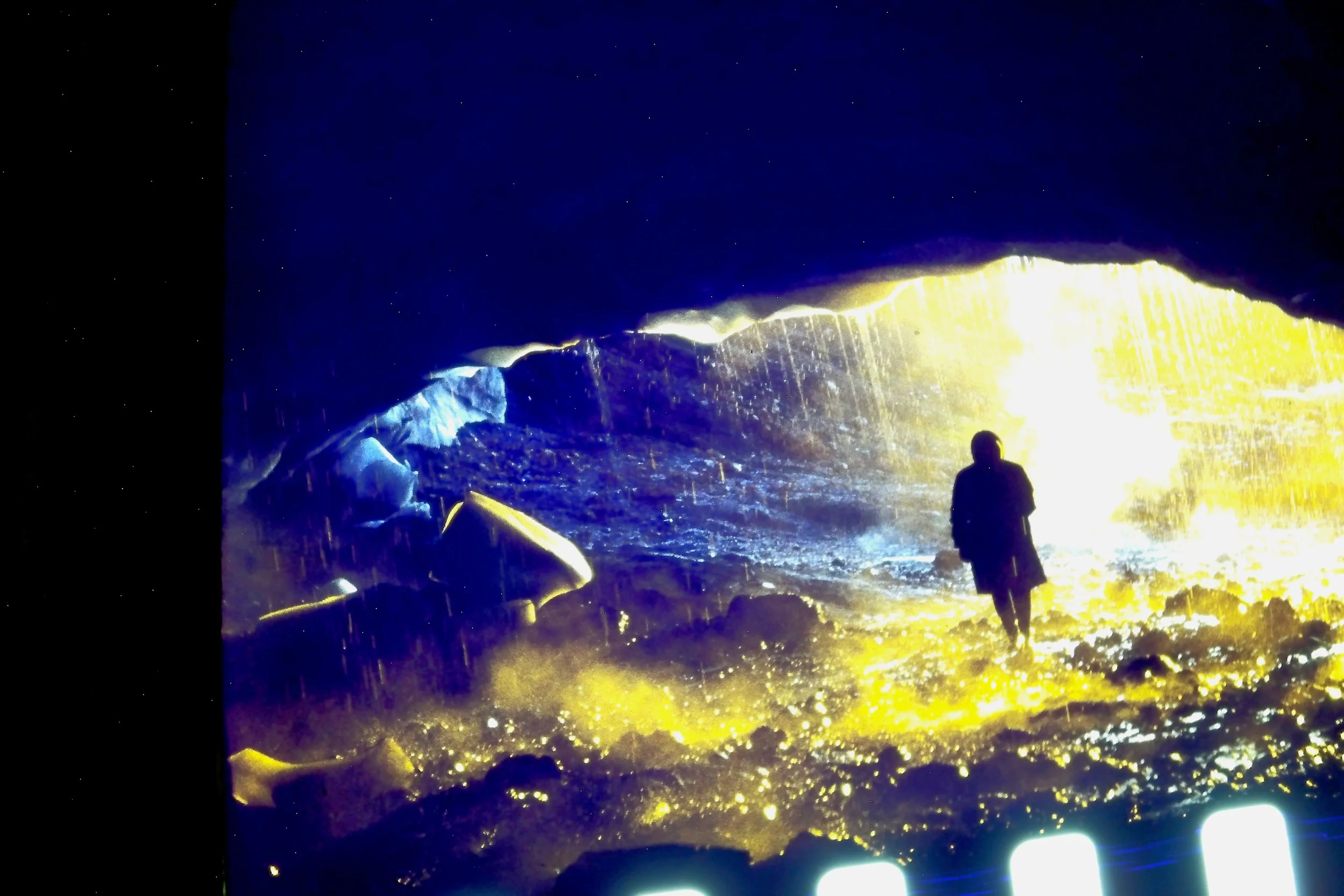
Dosa’s follow-up to her acclaimed 2022 documentary Fire of Love shifts the subject from inferno to ice. The documentary is inspired by the work of Icelandic writer Andri Snær Magnason—particularly his 2019 book On Time and Water. Per the documentary, it is estimated that all of Iceland’s glaciers will be gone within 200 years—and the speed of their disappearance is only accelerating. Magnason’s emphasis on time is more poetic than apocalyptic, though. The emotional plea for us to protect our environment is steeped in the understanding of how glaciers function as an archive: The ice that is melting at an exceedingly alarming rate took centuries, even millennia to form, containing rain, ash, and even forests as they once existed alongside and even preceding the earliest human inhabitants. Magnason’s experience as an archivist (including reading Nordic myth captured in the national archives) and his grandparents’ deep ties to the glaciers (they were some of the ice’s earliest researchers) informs Dosa’s approach to constructing a work about the natural and spiritual ties that bind us.
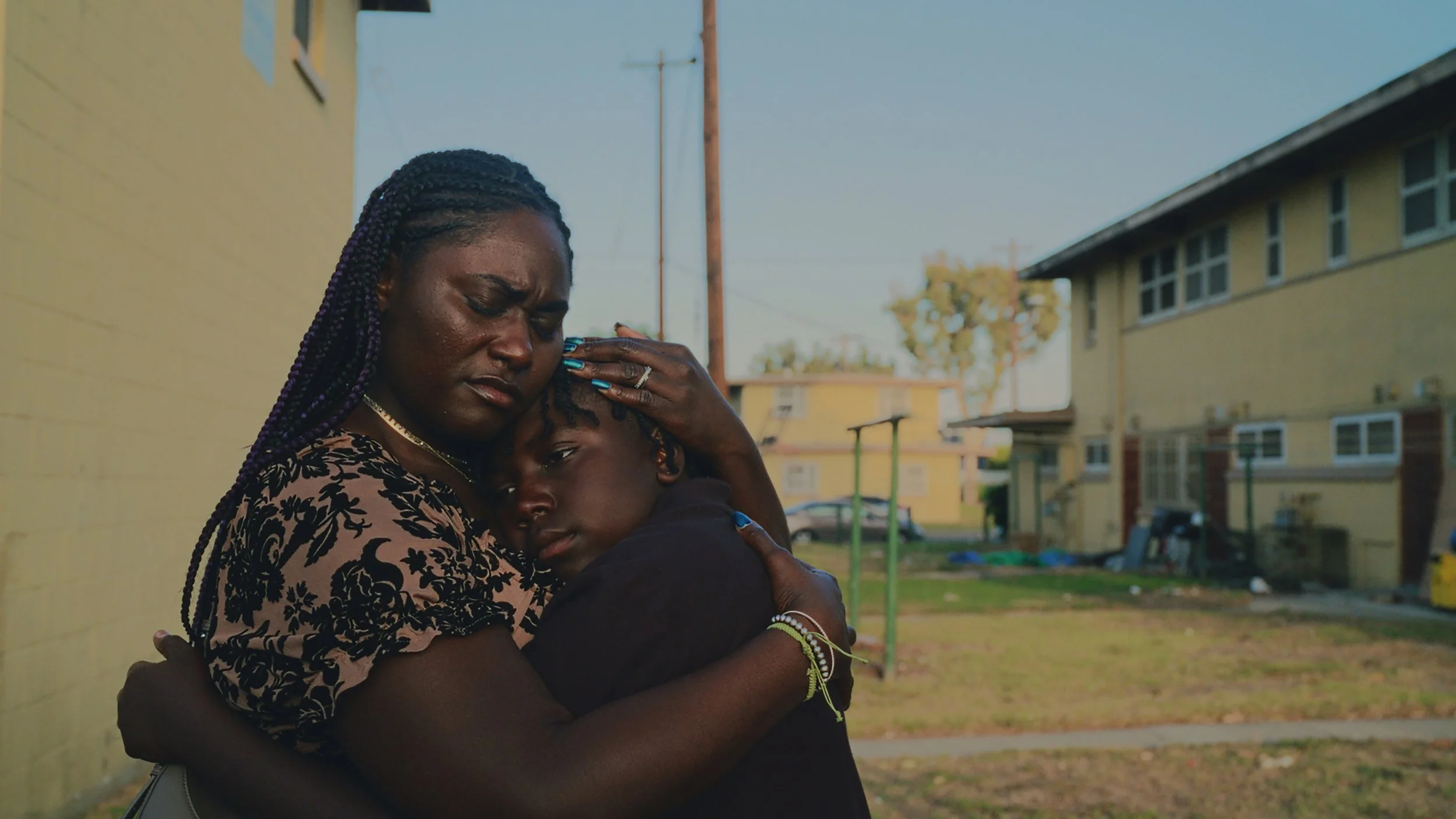
If I Go Will They Miss Me similarly explores these generational links, closely examining the relationship between father and son. Lil Ant (Bodhi Dell) is interested in mythology, too, though instead of Norse myth, he turns to the Greek gods he learns about in school. To him, his father Big Ant (J. Alphonse Nicholson) is a paternal god; not the wrathful god Zeus, but his brother and overseer of the sea Poseidon. If his father is Poseidon, then Lil Ant must be Poseidon’s son, Pegasus, destined to fly just like the planes that perpetually depart from LAX, flying over Ant’s home in Compton. Big Ant’s mistakes—youthful shyness that turned into a need to prove something, stints in jail, seeking escape in a mistress—drive him away from his son, but they don’t sully Lil Ant’s vision. We learn that Big and Lil Ant both see spectres of boys lining up as though they’re airplanes ready to depart from the runway, a haunting that forever connects them.
Despite differing social concerns, these films are connected by their elegiac approach to memory. Just as Magnason tells the stories that have been passed down to him about his grandparents’ place in the world, Lil Ant absorbs stories from his mother Lozita (Danielle Brooks) about his father’s youth. These are not simply retellings, but the beginnings of myth—of something spiritual in how we understand our relationship to time and place. Planes and winged horses, glaciers and Ragnarök, warm beaches, icy peaks; these are realities that become bigger than us. They remind us we are not only connected closely to our pasts, but our futures. We will be the stories that are one day told. Now we must consider how we want them written.
Daniella Mazzio is a Chicago-based writer, consultant, and occasional performer. In 2025, she launched “Hand Me the Mike,” a film podcast exploring the work of American actor Michael Shannon. She was a recipient of last year’s Emerging Critics Grant.
