“A Form of Fear” | Adrian Chiarella, Leviticus
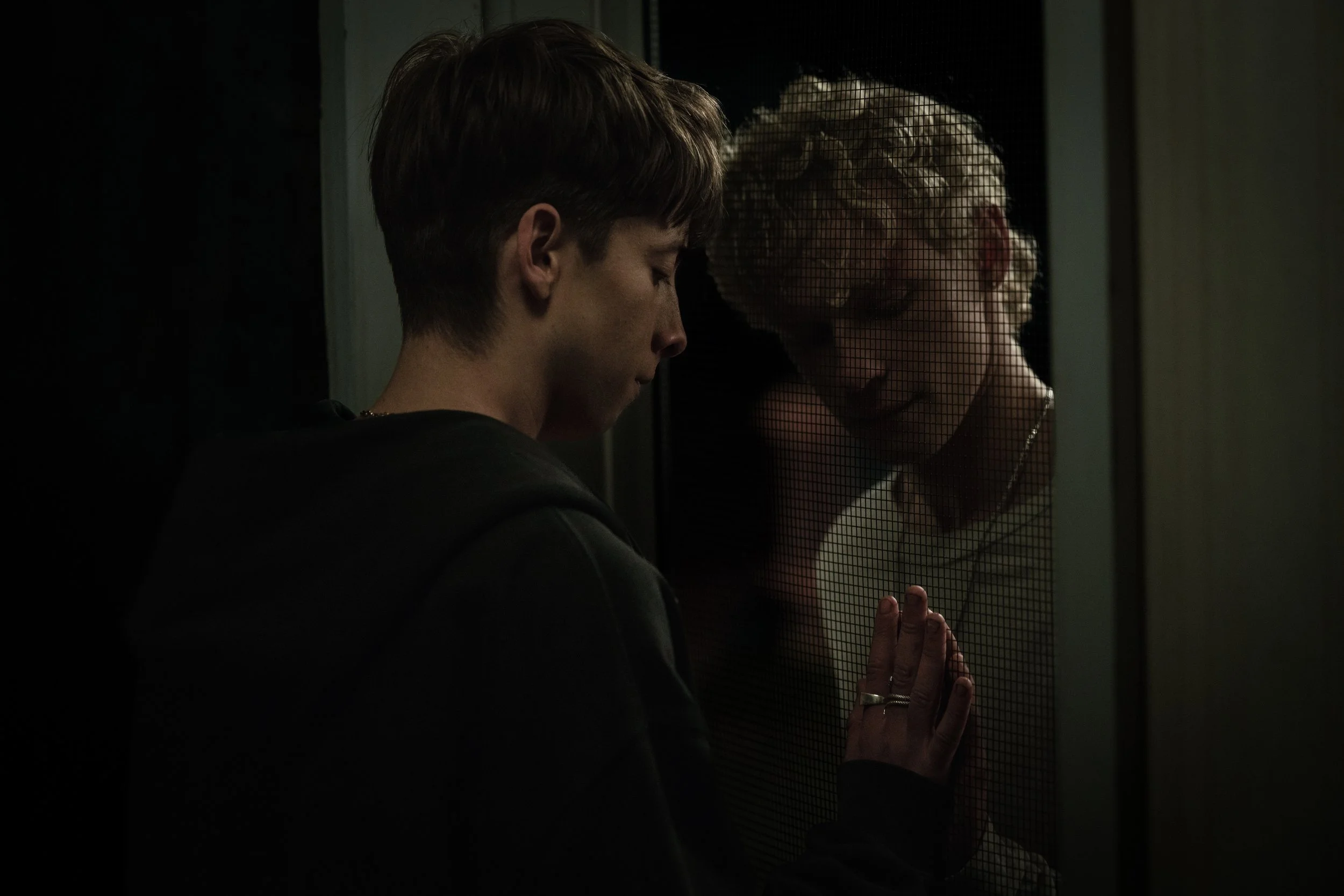
Two teenage boys must escape a violent entity that takes the form of the person they desire most — each other.
Leviticus screens Saturday, May 2, at 11:59 p.m., at the Music Box Theatre in Chicago, as part of the Chicago Critics Film Festival. Ahead of the screening, Chiarella graciously took the time to answer this year’s filmmaker questionnaire. Below, his individual responses.
How did you first become interested in filmmaking? What was your path toward directing your first film?
I’ve always loved movies. When I was a kid in the 80s, my cousin was one of the first people I knew to have a VHS player. We’d watch her tape of Aliens over and over, sitting inches away from the TV. In those days, no one seemed to worry about how much screen time kids were getting. Or what we were watching.
When I grew up, I started my career working as a film editor. I worked with a lot of interesting directors and loved talking to them about their ideas, their process and what it was that made them want to tell stories. Those years were very inspiring for me. I wrote short film scripts during that time. And when I was ready to start turning my scripts into films, those directors were super enthusiastic to help me. Filmmaking has a real sense of community.
What inspired you to make the film you're bringing to the festival?
I grew up during a time when the rights of the LGBTQ+ community were steadily improving. But over the past few years, I’ve felt that progress beginning to recede. There seemed to be a growing wave of homophobia, and the rhetoric in our political and public spheres was becoming noticeably darker.
I wanted to make a film that explored what homophobia really is. At its core, it is a form of fear. Horror felt like the natural genre to express that, and it allowed me to tap into one of the genres I’ve always loved most.
Tell us about a film that you consider a guiding influence (whether it has informed your overarching vision as a filmmaker, directly informed the title you're bringing to the festival, or both).
In The Mood For Love, Wong Kar Wai’s film, is a huge inspiration for me. I saw it at a time when I was starting to understand what a film could really be. I remember the realisation that even in a film with some of the most beautiful images you’ve ever seen, it’s what’s not seen that really makes the story come alive.
Tell us about a location that's held significance to the film you're bringing to the festival: a setting where filming took place, a geographic area that provided a source of inspiration, or another type of space that comes to mind for you in thinking about the film. What made this place so special?
There’s an abandoned industrial building that the lead characters break into near the start of the film. It’s an old malthouse about 50 miles out of Melbourne. It had these hopper funnels descending from the roof, like an upside-down cathedral ceiling. And the light streamed in from these high windows. There was something about it that had a spiritual quality. Finding that location really unlocked something in the overall vision for the film - this clash of fragile, human-made elements with the natural world.
The theatrical experience brings us together to celebrate artistic experience and expand our horizons as human beings. Tell us about a memorable theatrical experience from your life.
I saw Dunkirk at IMAX on opening weekend. About twenty minutes in, the projector suddenly cut out and, for some reason, started playing ads for the candy bar. This interruption only lasted a minute, but you could feel the energy drain from a room full of hundreds of people. Then the film started again, and an immediate silence fell over the cinema. Everyone was so completely locked into that opening act that even the interruption couldn’t break it—the audience snapped straight back into its grip.
